
You’re planning to add an EV charger at home and want the electrical panel to handle it safely and cheaply. This article helps you think like a pro by focusing on key panel questions that affect cost, timeline, and safety so you can compare options and talk clearly with an electrician.
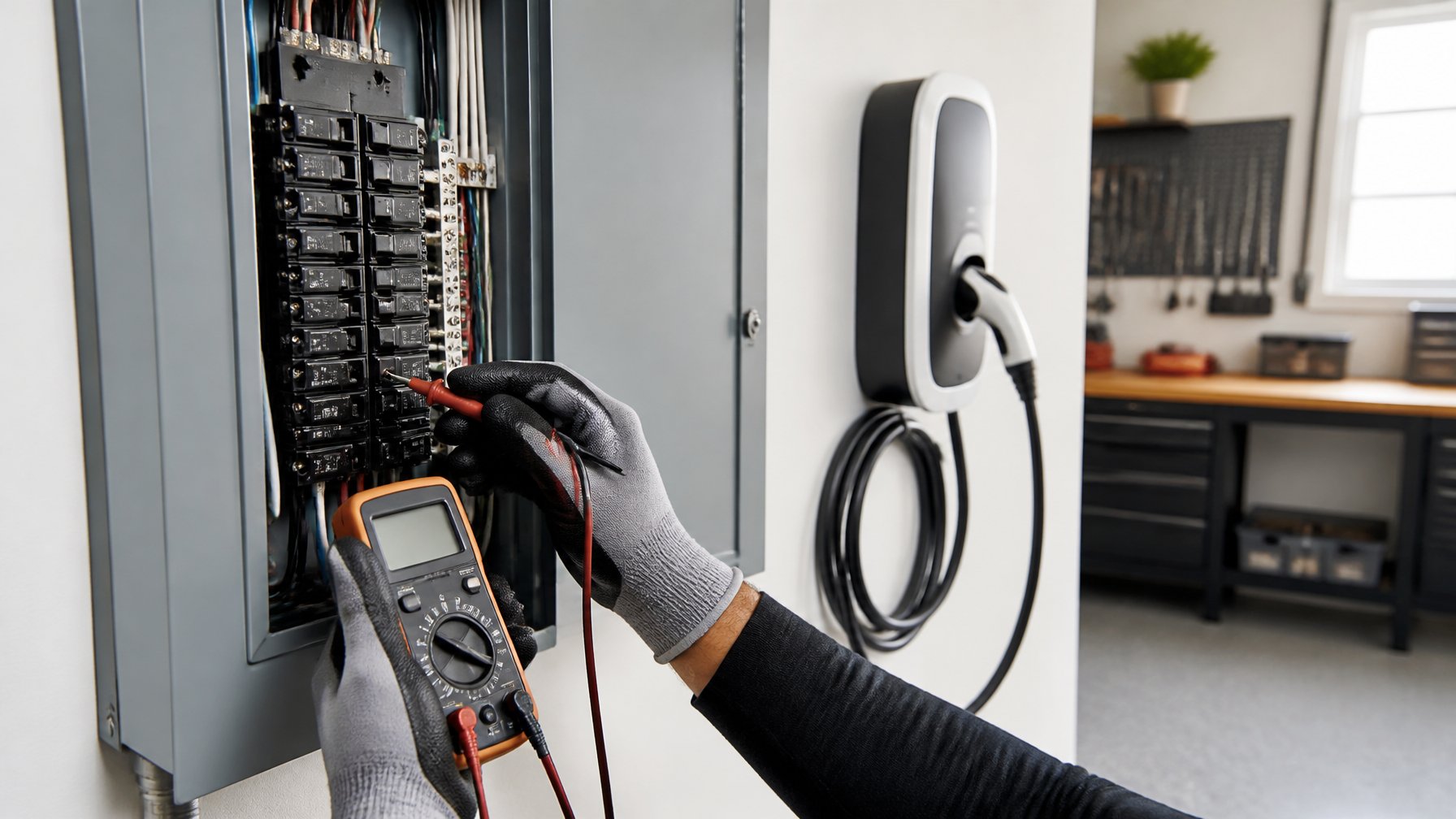
Know whether your main service size, available breaker spaces, panel age, and grounding will support a 240V charger before work starts. The piece walks through what to check, what to ask an electrician, and what tradeoffs to expect for Austin homes so you can pick the best route for your house and budget.
1) Confirm main service amperage (100A, 200A, etc.)
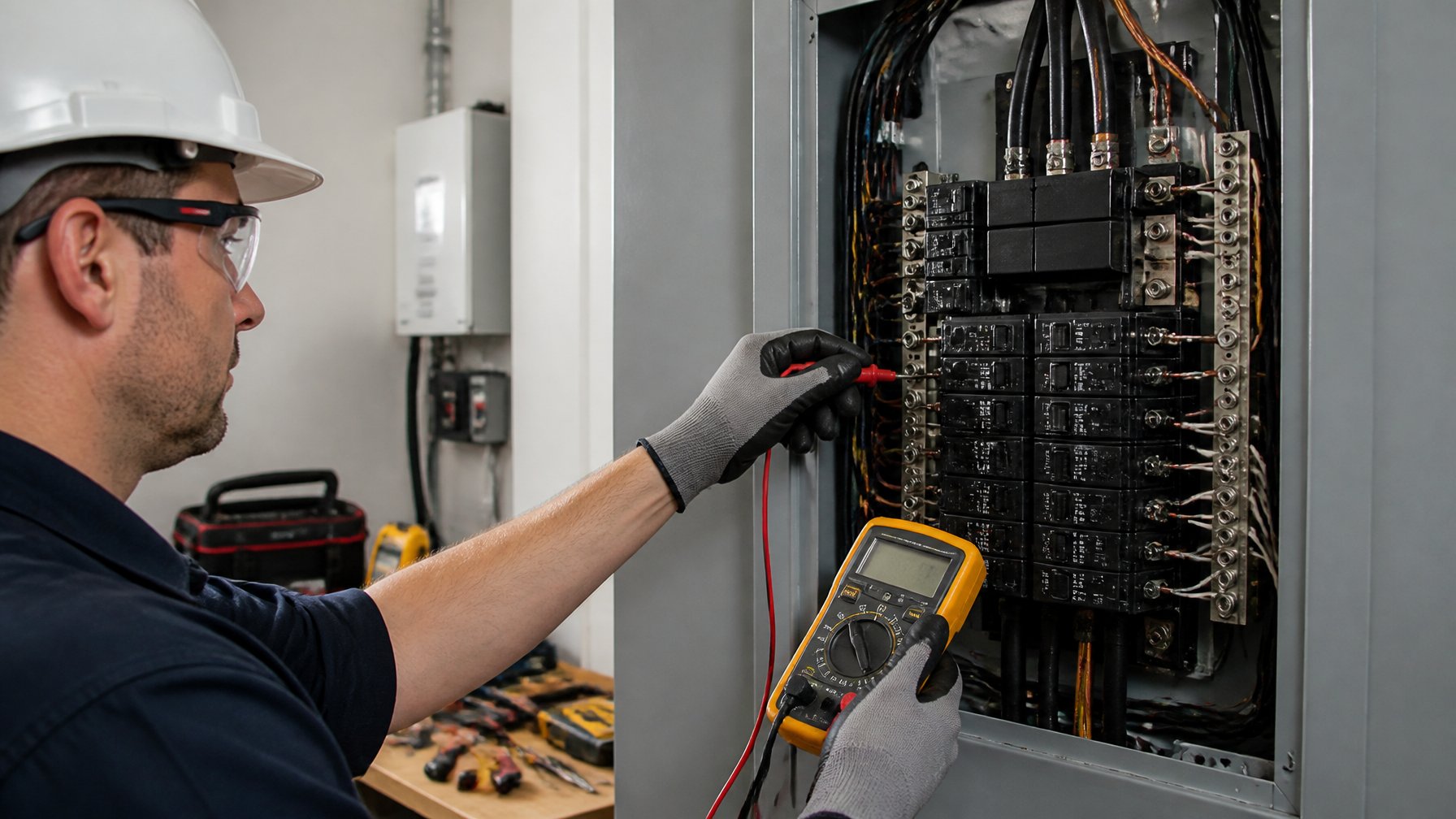
They should locate the main breaker on the service panel to see the amperage label, usually 100A, 150A, 200A, or higher. Compare that number to the EV charger’s required circuit size to know if the panel can support the extra load.
They should ask an electrician whether the existing load plus the charger will exceed the main rating. The tradeoff is adding a high-capacity charger versus costly main service upgrades.
They should check whether subpanels or load management options can avoid a full service increase. For help with planning and upgrades, visit the homepage.
2) Check available breaker spaces in main panel
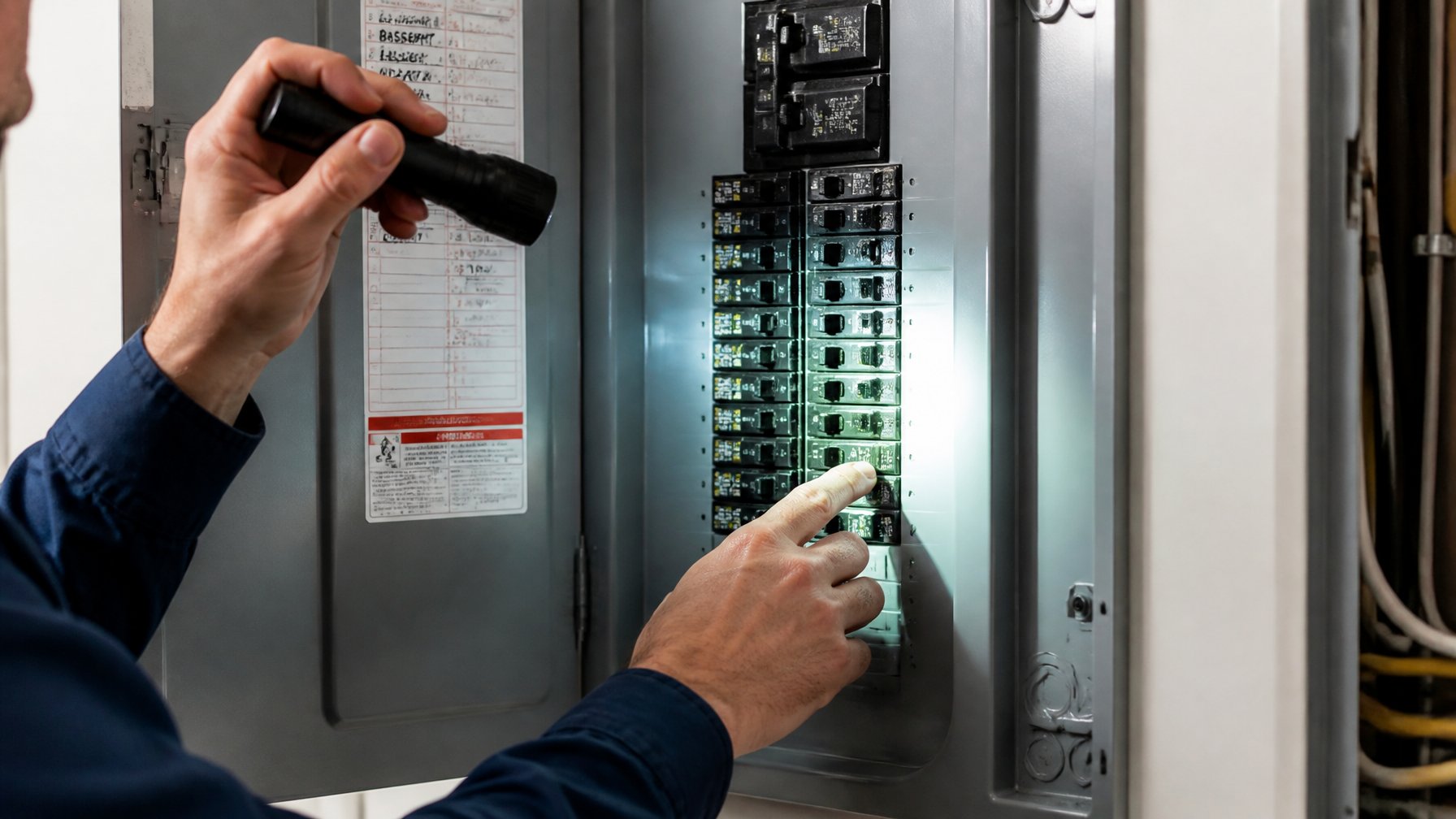
They should open the main panel and count unused breaker slots. Compare the panel’s total circuit capacity vs. the number of breakers installed now to see if there’s room for a new 240V two-pole breaker.
They should match the charger’s breaker size and the panel’s remaining slot type. Some panels need two adjacent spaces for a two-pole breaker; others may have tandem breakers that limit usable spaces. Ask an electrician whether slot spacing and bus ratings allow the new breaker without replacing the panel.
They should note the main breaker rating and load calculations. If the panel is near capacity, adding a charger might require a subpanel or panel upgrade, which costs more but gives cleaner, safer wiring. For help finding local pros or services, visit the homepage.
3) Verify panel age and model for compatibility
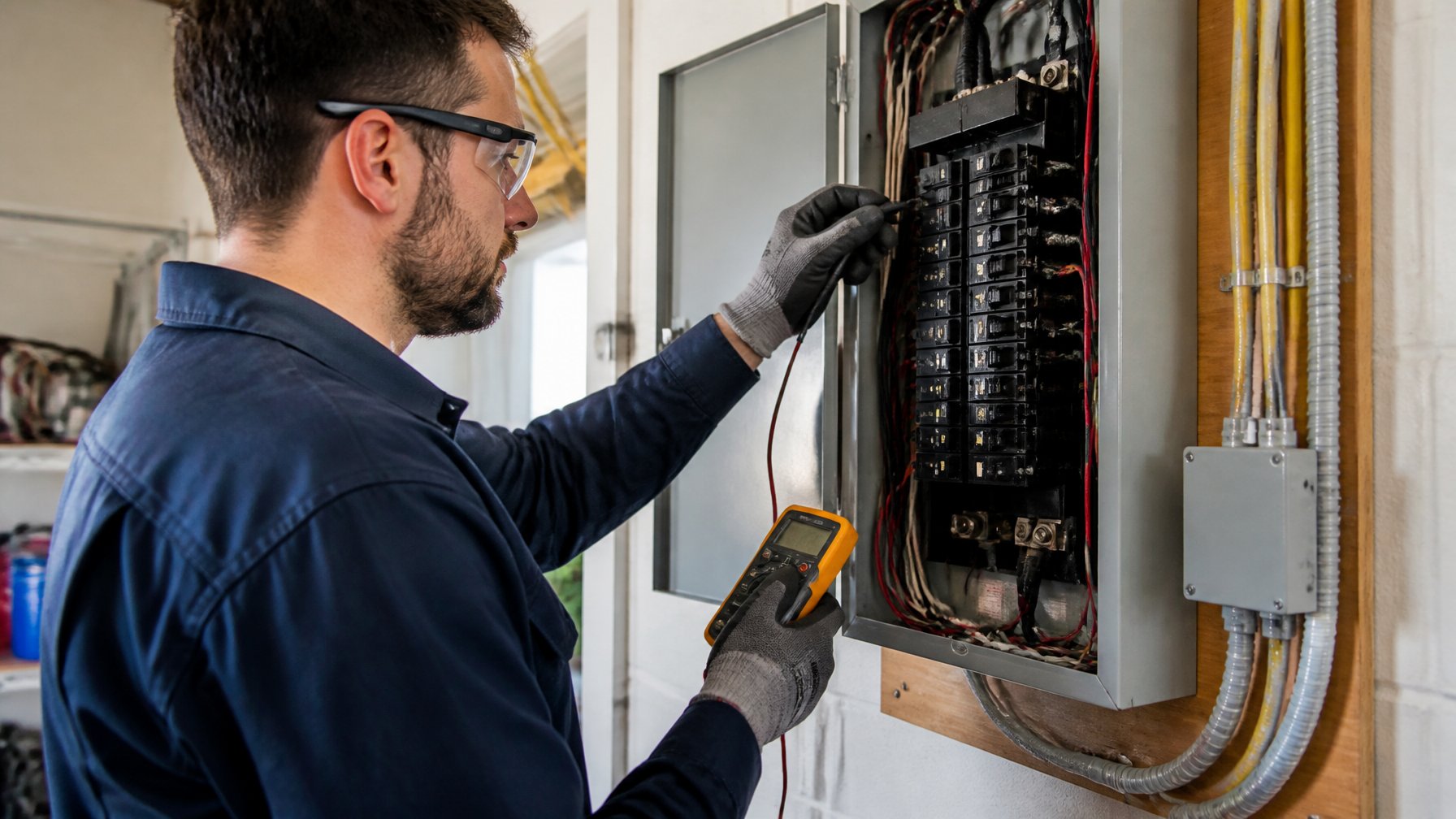
They should check the panel's manufacture date and model printed on the door or label. Older panels may lack space for new breakers or use discontinued parts, which affects whether they can add a dedicated EV circuit.
Compare the panel model to the charger's requirements. Ask what breaker types and amp sizes the charger needs, and confirm the panel accepts those breakers. If the panel uses obsolete breakers, they might need a subpanel or a full replacement.
Have them weigh repair versus replacement costs. Replacing a panel costs more up front but removes many compatibility limits. For help finding qualified electricians and service options, see the homepage.
4) Determine if panel is load-center or meter-main
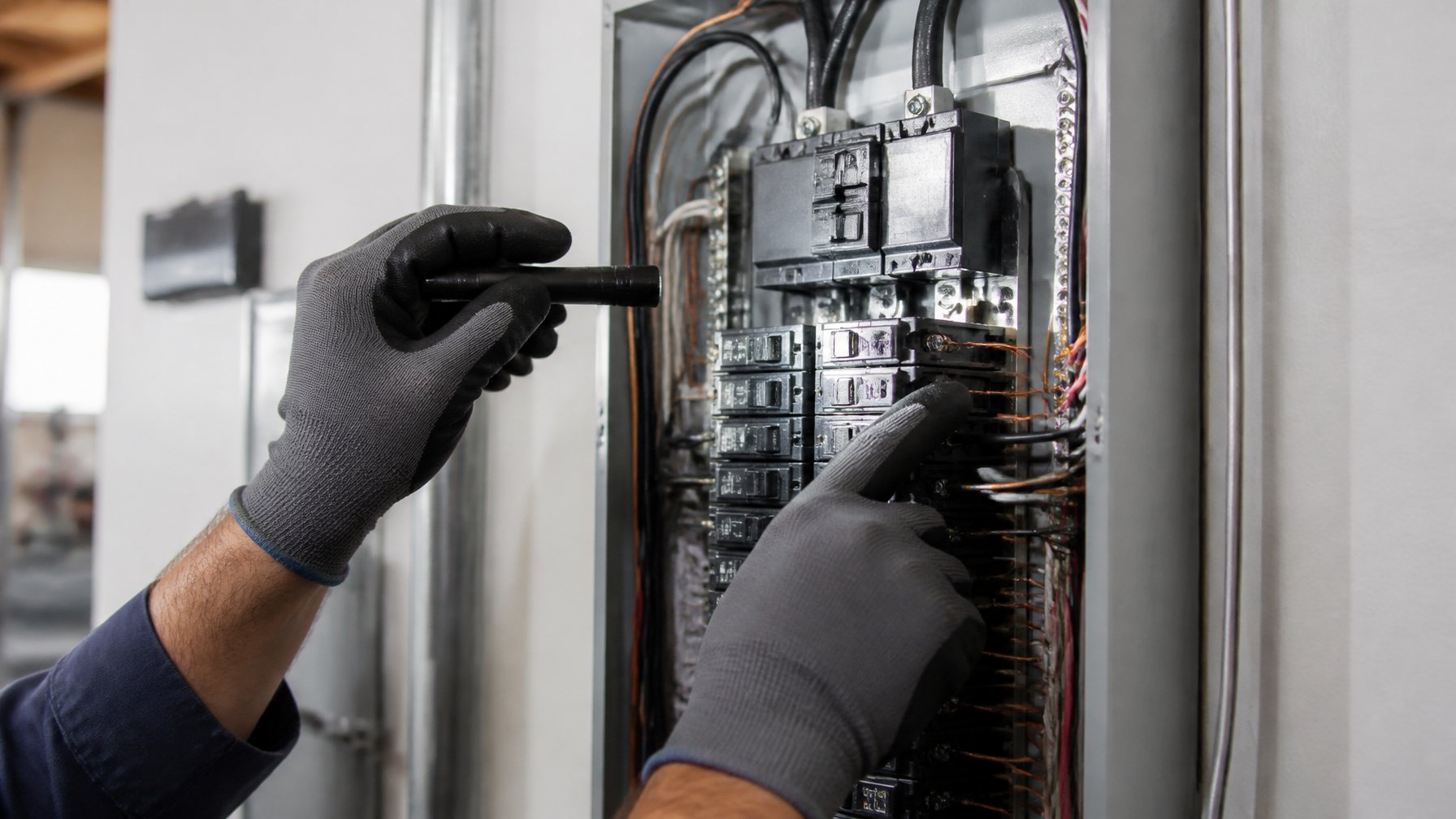
They should check whether the main device is a load-center or a meter-main because that affects where the EV charger can be tied in. A load-center has only breakers and a separate meter outside. A meter-main combines the meter and breakers in one box, often on an exterior wall.
Ask the electrician to point out the meter-main if present and explain the limits it creates. Meter-mains often leave little room for added breakers, so the homeowner may need a subpanel or service upgrade. Compare the cost and disruption of a subpanel versus replacing the meter-main.
They should compare available breaker spaces and whether the main breaker is large enough for the charger plus existing loads. If breaker spaces are full, adding a subpanel is common. Visit the homepage for panel upgrade and EV charger service options.
5) Identify existing double-lugging or tandem breakers
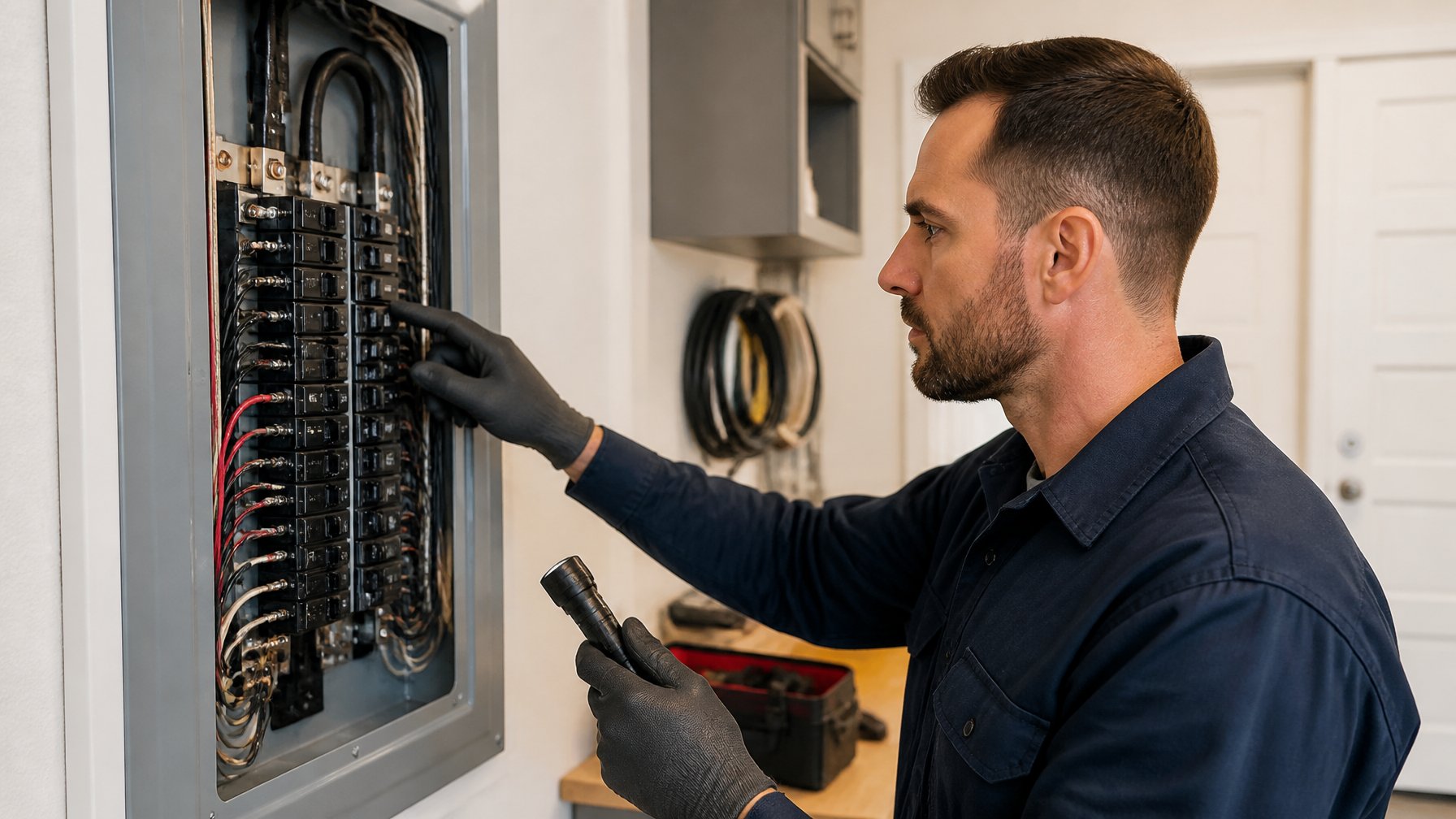
They should inspect the panel for double-lugged breakers where two wires share one screw, or tandem breakers that fit two circuits in one slot. Compare the breaker labeling and wire counts to the panel diagram to spot mismatches. Ask whether local code allows those setups and if the panel’s bus can handle the extra connections.
They should note that double-lugging can hide overloaded circuits or violate breaker limits. Ask an electrician to test each circuit’s load and to show whether those tie-ins need separate breakers. Consider the tradeoff between replacing tangled wiring or upgrading the panel versus adding a subpanel for the EV charger.
Homeowners can read more about electrical upgrades and services on the homepage.
6) Locate subpanel options and feeder capacity
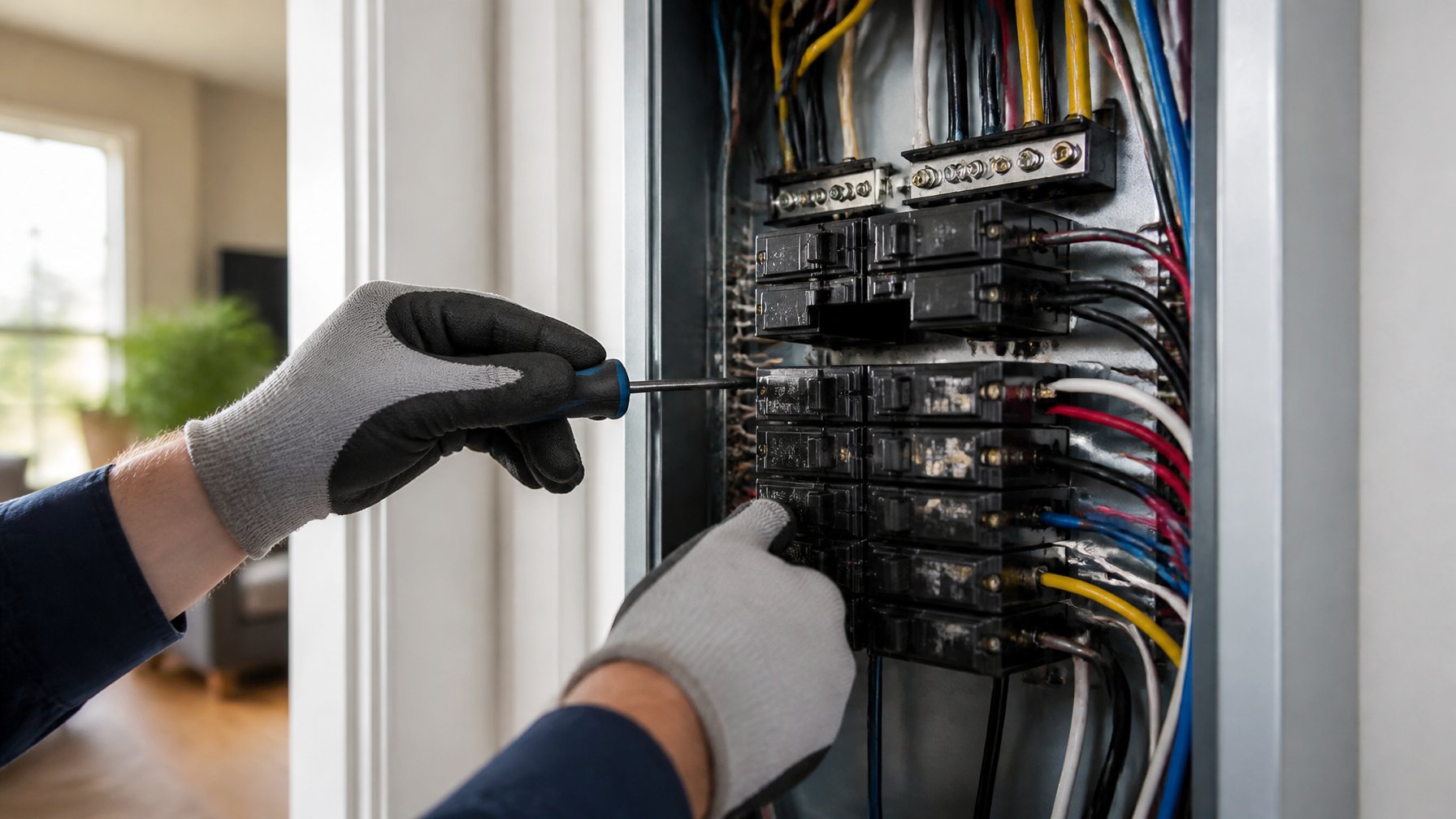
They should check whether a subpanel exists near the garage or driveway. Compare the distance and conduit needs; a closer subpanel reduces wiring runs and labor. Ask if using the existing subpanel avoids opening the main panel.
They should verify the feeder capacity from the main to the subpanel. Ask the electrician to measure the feeder conductor ampacity and the main breaker rating. Tradeoffs include upgrading feeders versus installing a new subpanel closer to the EV location.
They should consider adding a new subpanel if space or breakers are limited. Compare costs of a new subpanel, feeder upgrade, and potential main-service upgrade. Ask about permitting and how the change affects load calculations.
They should look for a clear route for the feeder and space for conduit. Compare surface-mounted versus buried conduit options for cost and durability. For service options and professional help, see the homepage.
7) Assess dedicated 240V circuit feasibility and gauge
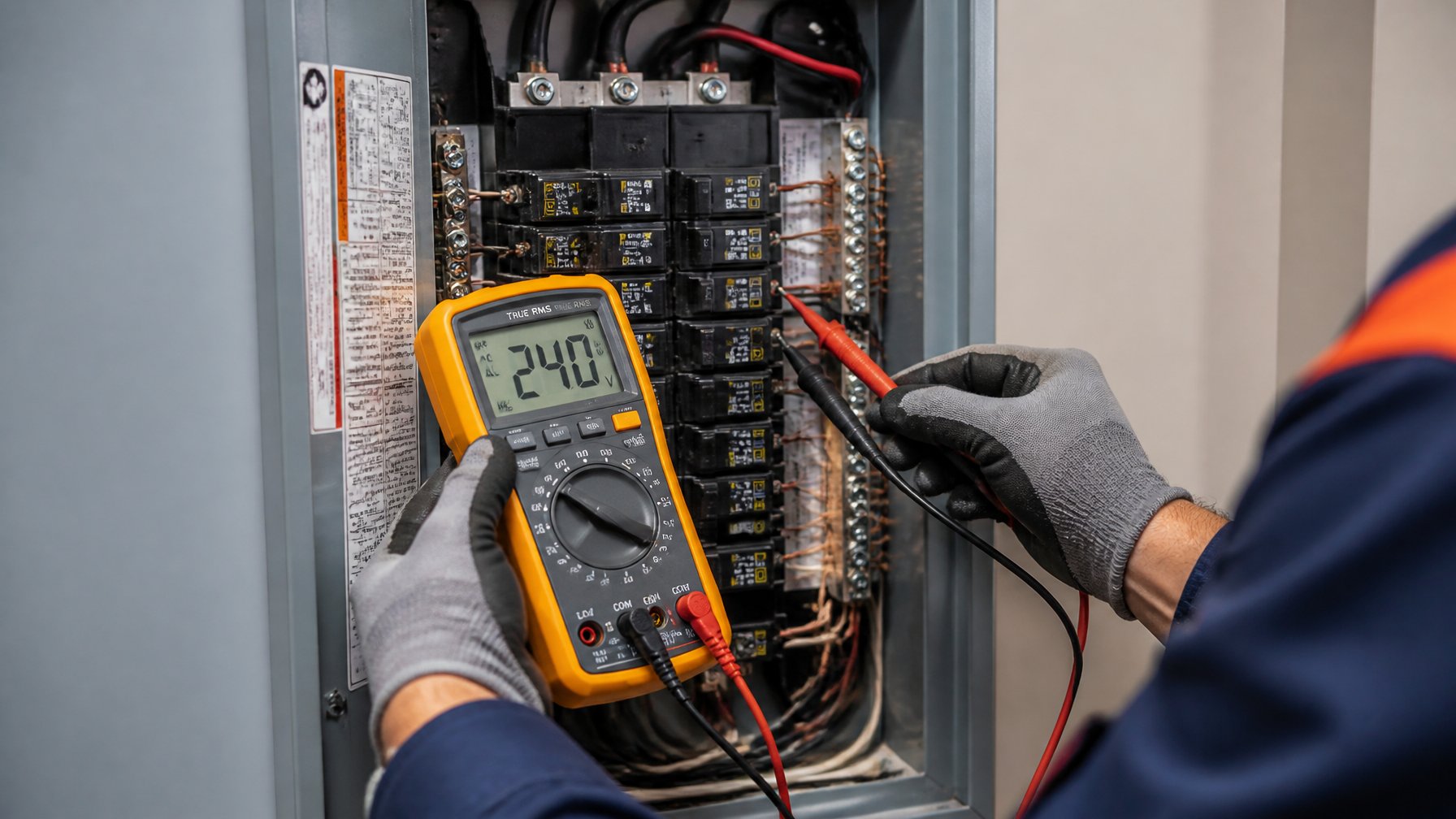
They should check if the panel has space and capacity for a new dedicated 240V circuit. Compare the panel’s available breaker slots and total amperage rating to the EV charger’s recommended circuit size. Ask an electrician whether a two-pole breaker fits and if a subpanel or main panel upgrade is needed. Tradeoff: upgrading adds cost but avoids overloads.
They should confirm required wire gauge for the charger’s amperage and circuit length. For most Level 2 chargers, 40–50 amp circuits use 6 AWG copper, while 30 amp circuits use 10 AWG. Ask about voltage drop for long runs; larger gauge may be needed for long cable runs to the garage or driveway.
They should consider future vehicle needs and home loads when choosing gauge and breaker size. Compare current charging needs to potential upgrades later. Visit the homepage for more home EV charger planning resources.
8) Evaluate grounding and bonding condition
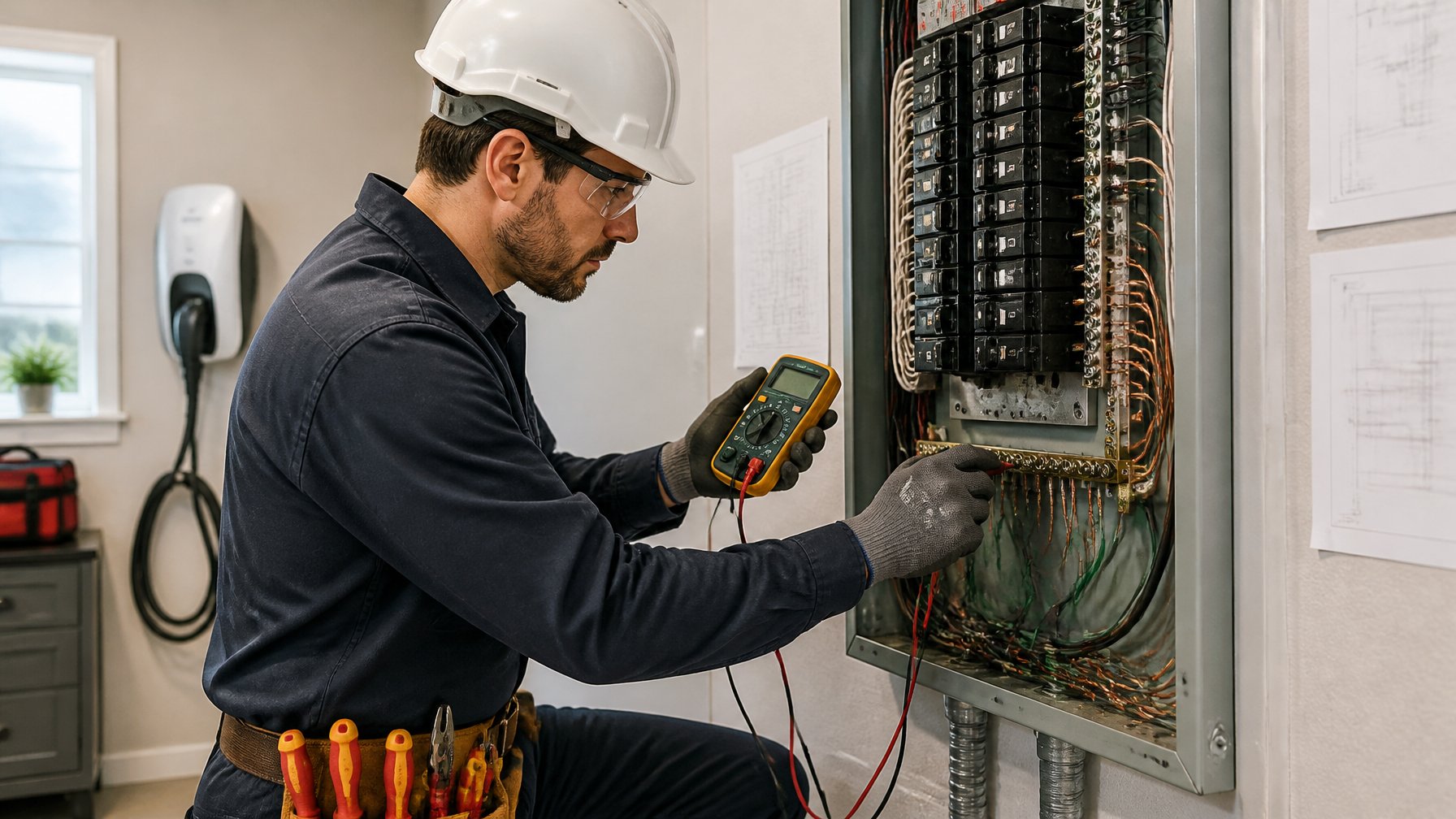
They should check that the panel’s grounding and bonding meet code and are in good shape. Compare the grounding electrode conductor size and connections to what the local code requires, and ask if the ground rod, water pipe bond, or system bond is intact and corrosion-free.
Have an electrician test continuity between the neutral and ground where appropriate. Ask whether the main bonding jumper is present and if any loose clamps, paint-covered joints, or rust could raise resistance and create a shock risk.
Consider the tradeoff between repairing old bonds versus replacing the panel. Repairs can cost less up front, but full replacement may offer clearer compliance and lower long-term risk. For more guidance on electrical upgrades, see the homepage.
9) Confirm presence of AFCI/GFCI requirements
They should check if the panel and branch circuits need AFCI (arc-fault) or GFCI (ground-fault) protection. Compare the charger’s installation manual with local code language and ask the electrician which device type and placement meet both NEC and local amendments.
Ask whether existing breakers are combination AFCI/GFCI or if separate devices are needed. There’s a tradeoff between replacing breakers (clean look, higher cost) and using external protection devices (lower breaker cost, more equipment in the panel).
They should also confirm spare space and bus capacity for required breakers. If panel space is tight, ask about tandem breakers, subpanels, or service upgrade options and compare costs and disruption levels.
See the main service page for help finding electricians familiar with EV charger installs.